Concorde
A framework for AI agents that act for more than one party at the same time, and are controlled by none of them individually.
What a shared agent is
A shared agent is an AI agent that acts for several parties at once. No single party owns it, and no party can reach it privately. Every message into the agent and out of it goes through a Gateway that you run.
Two people who share a household budget are a good example. Both talk to the same agent. Both need to trust that the agent does not take instructions from one of them in secret. The Gateway is what makes that structure real. It holds the Message log and the agent's signing key. It is the only path between a person and the agent.
An Operator is whoever runs and configures a shared agent. Every party trusts the Operator. The Operator writes the entry point, holds the keys, owns the database, and runs the stack. Most of this site is written for that reader.
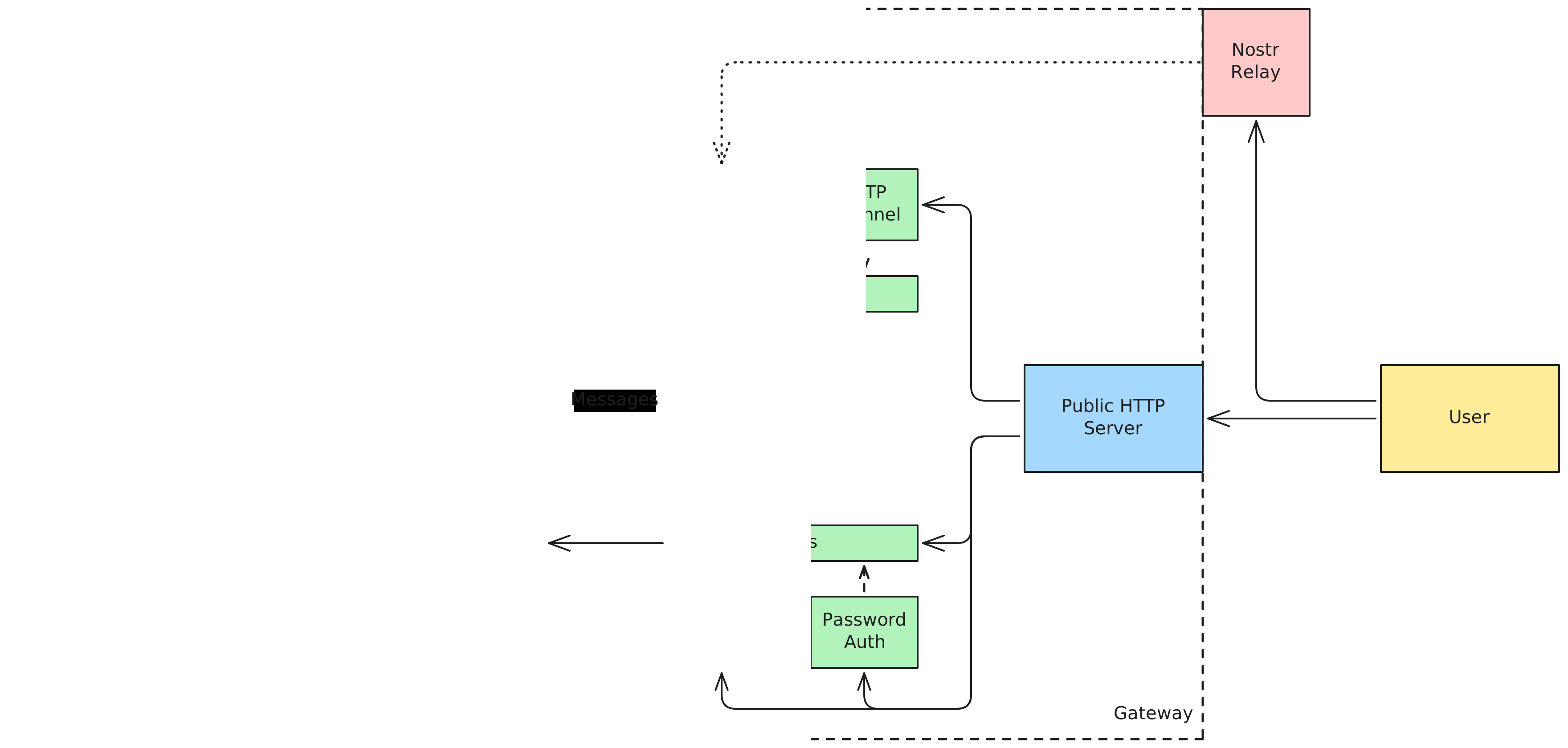
Everything inside the dashed boundary is the Gateway. The Architecture page reads the picture part by part.
Where to start
| Page | What it answers |
|---|---|
| Build a shared agent | How do I get a working deployment from nothing? |
| Architecture | What are the parts, and why are they separate? |
| API reference | What is the exact signature of this function? |
Read the guide first. It builds one small deployment step by step, and it links to the architecture page wherever a step needs the reasoning behind it.
What the framework gives you
- A Gateway that mediates all traffic between people and the agent.
- A serial Signal Worker, so the agent does one thing at a time.
- Messaging over HTTP or Nostr, with one Message log per person.
- Authentication as a component, with passwords or Nostr keys.
- Signed Decisions, so the agent can commit to something that a third party can check.
- Scheduling, so time can wake the agent.
You choose which of these your deployment builds. The framework builds only the infrastructure that every deployment needs, and you construct the rest by hand.
What you must provide yourself
The framework does not do these things, and each omission is deliberate:
- Confidentiality between parties. The agent reads every Message and decides what to send to whom.
- Resistance to prompt injection. This risk is accepted, not solved.
- Confinement of the Agent Implementation. Your deployment confines it.
- Rate limiting. The login route is unthrottled.
The Architecture page states the full list. Read it before you deploy.